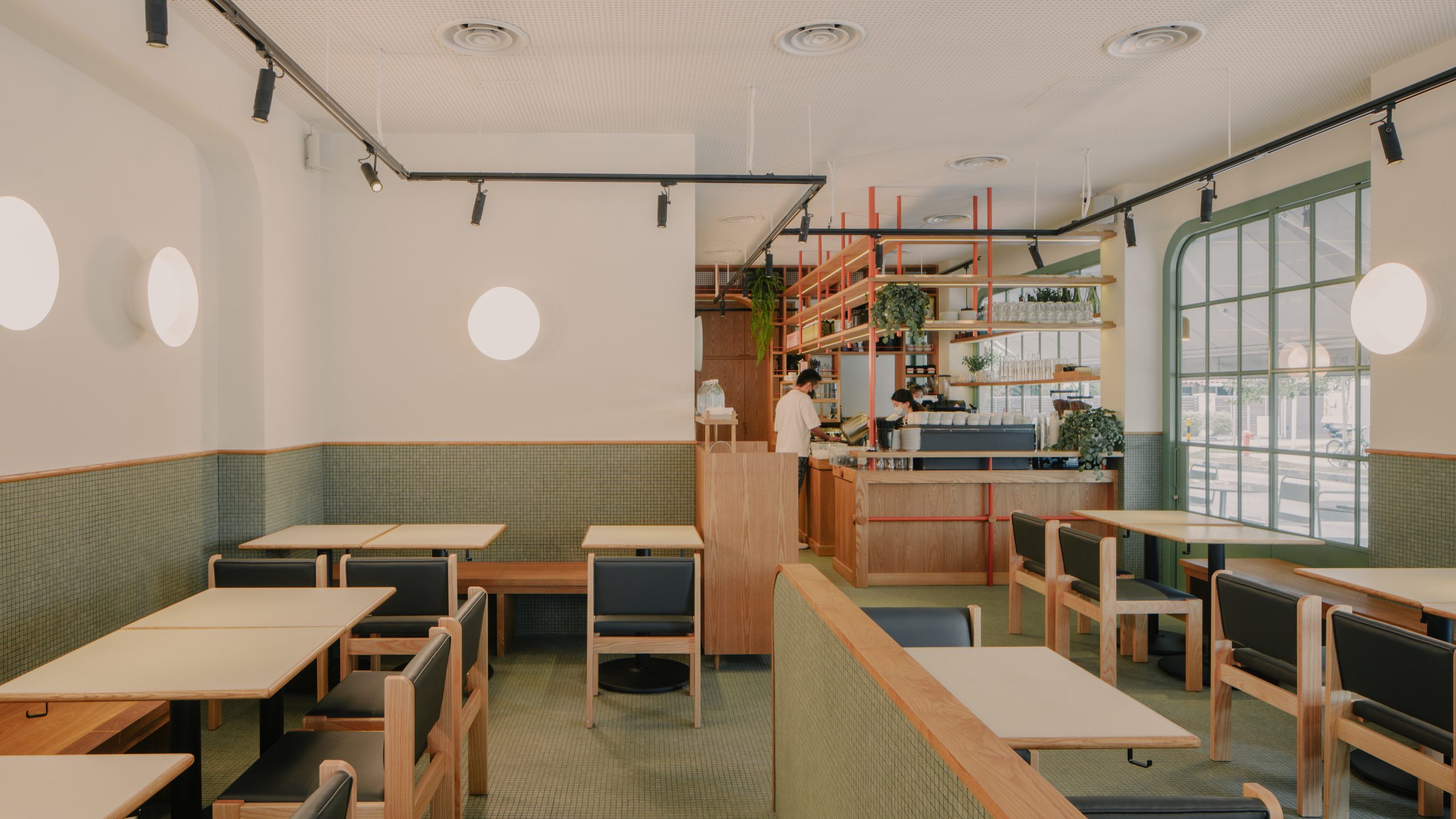
Located at Singapore’s East Coast Road, the Neptune is a cafe that adapts Japanese interior elements. HuiDesigns, one of the masterminds behind this cafe design, worked with their client to visualise their concept on a green-coloured scheme dining area.
-
- Photo Credit: HuiDesigns
-
- Photo Credit: HuiDesigns
-
- Photo Credit: HuiDesigns
-
- Photo Credit: HuiDesigns
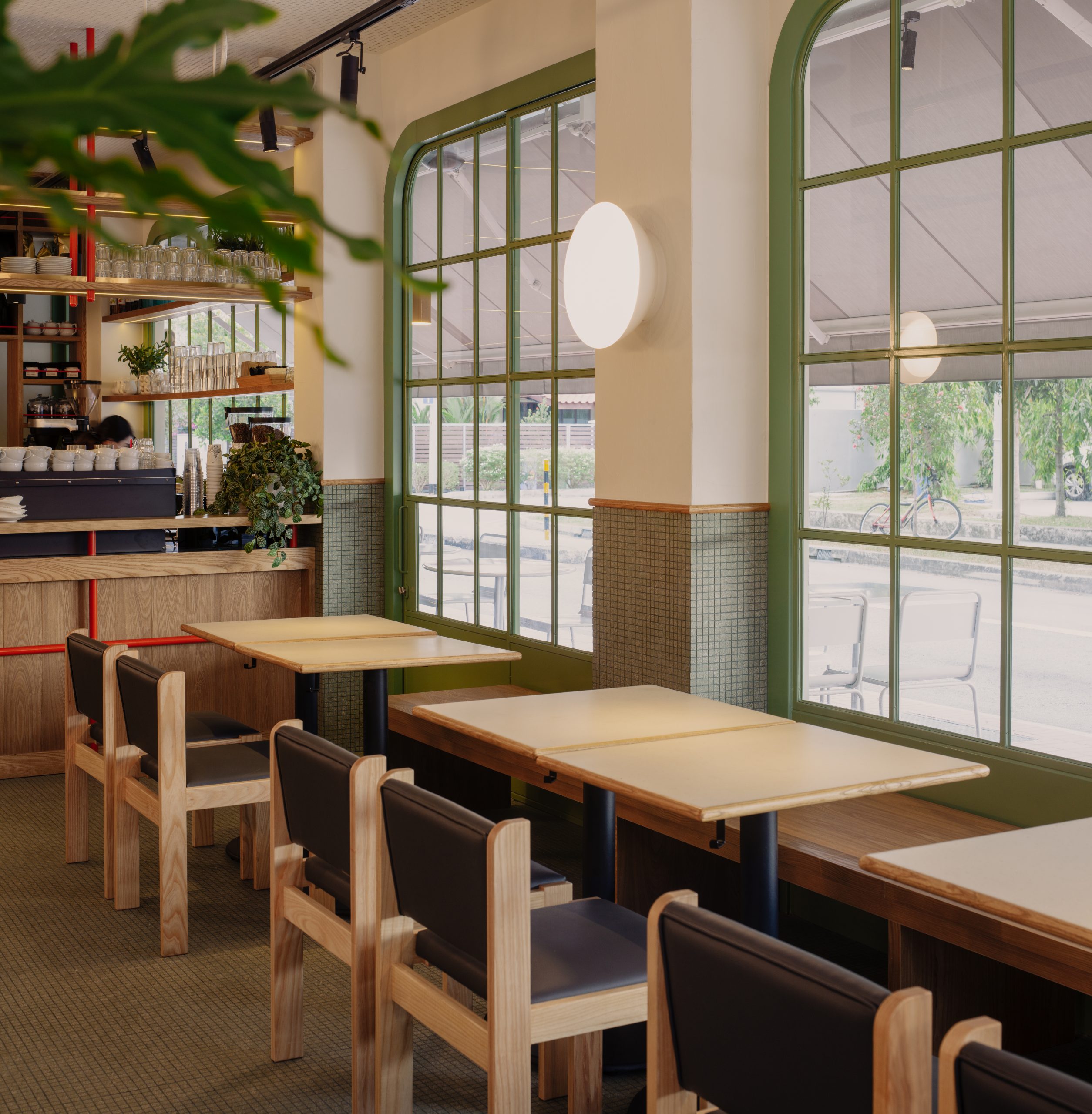
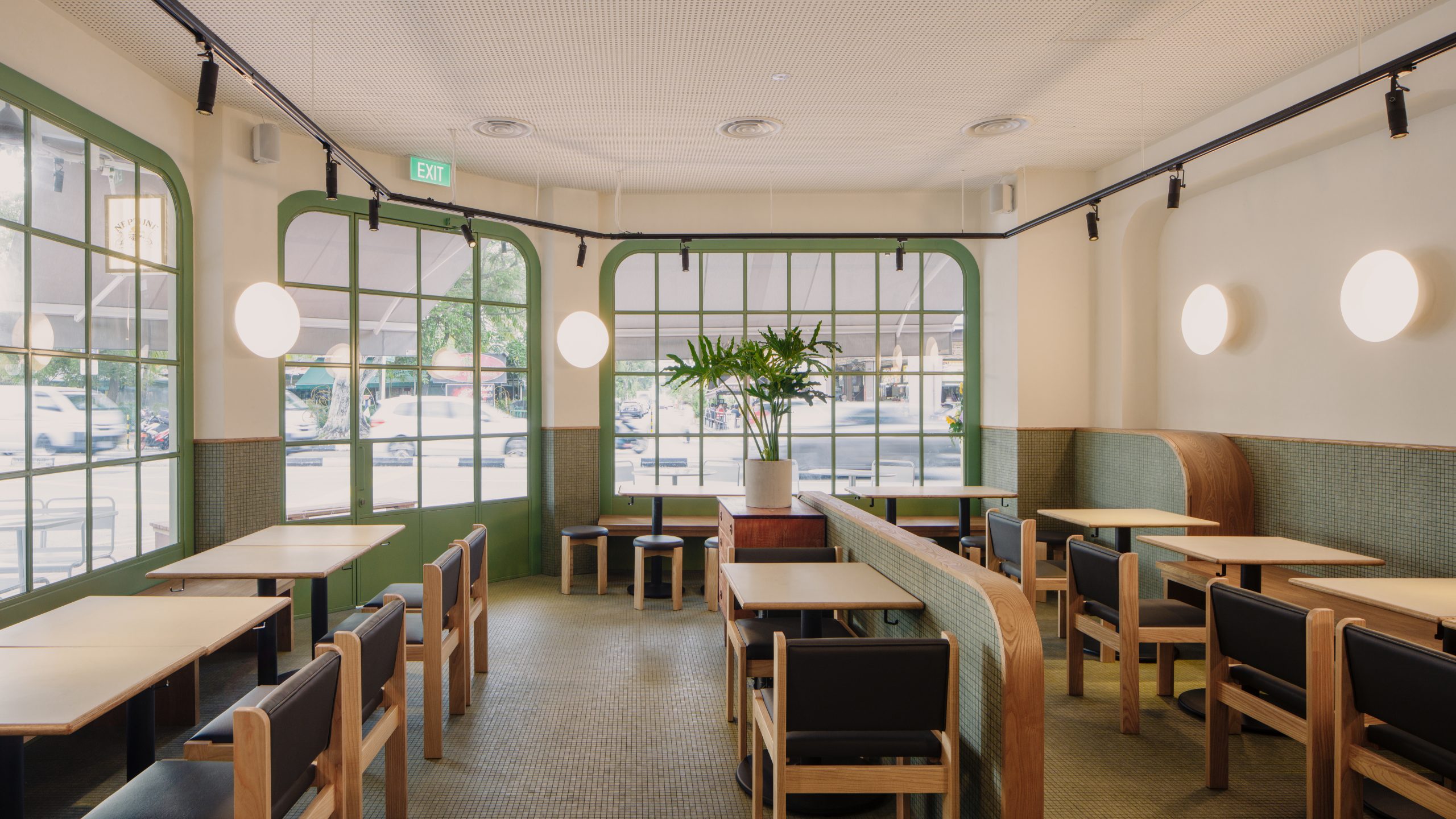
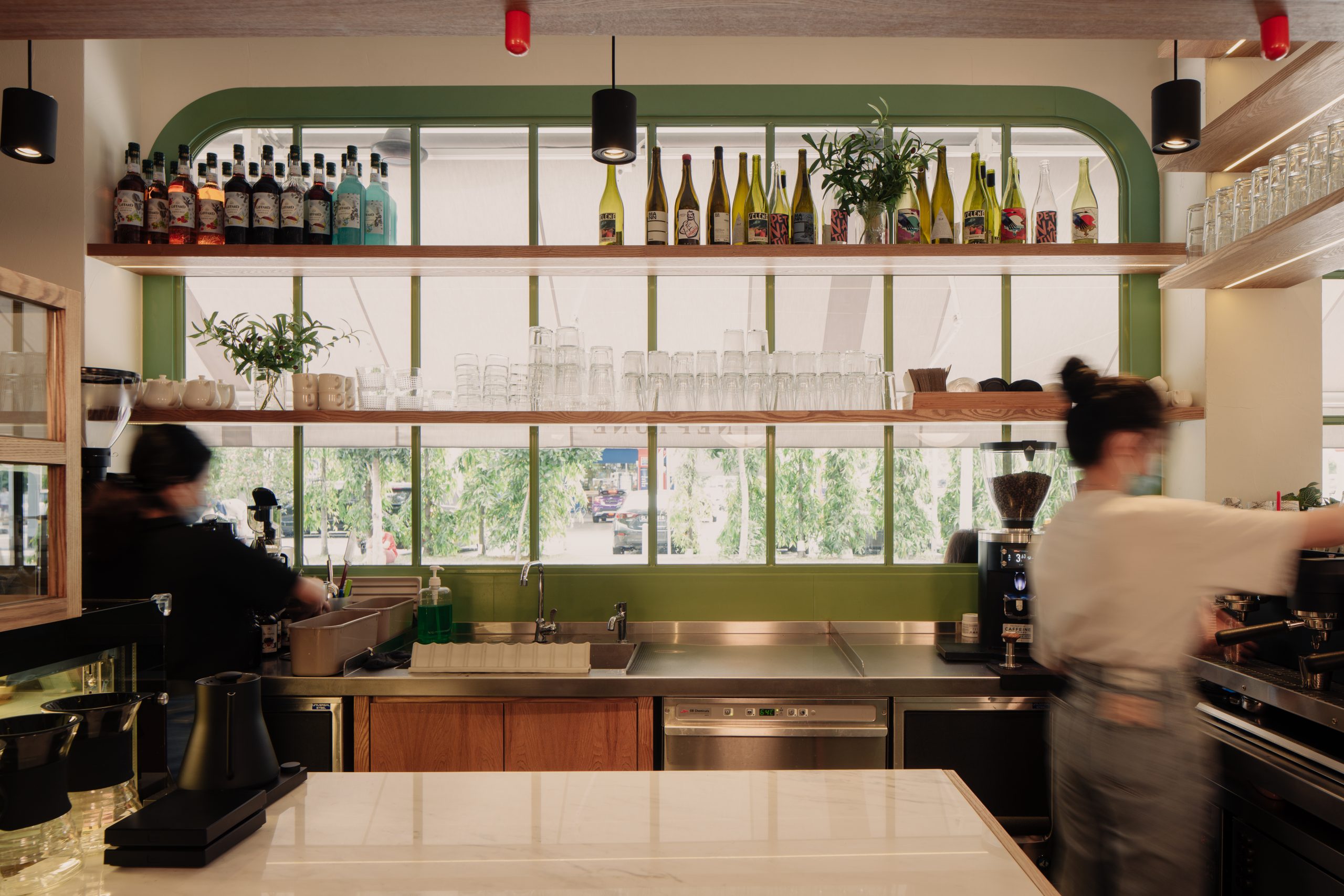
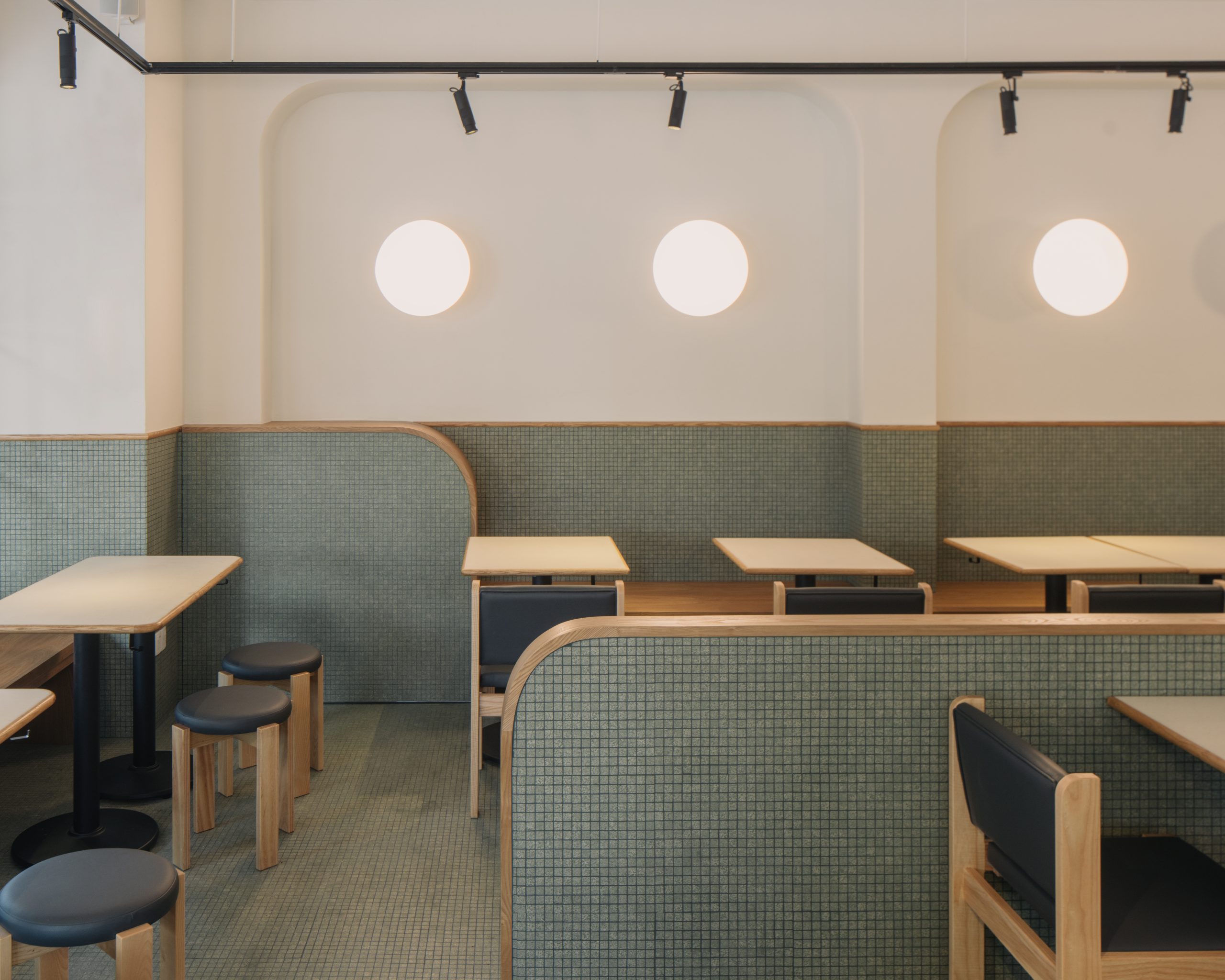
The Neptune has a clean design with a simple colour palette, which creates a Japanese Zen-like atmosphere in the space. Sage green, as the dominant colour, works harmoniously with a natural wood finish. The design of the coffee counter takes reference from Japanese carpentry and woodwork, while incorporating orange pipes to give the space a pop of colour.
-

- Photo Credit: HuiDesigns
-
- Photo Credit: HuiDesigns
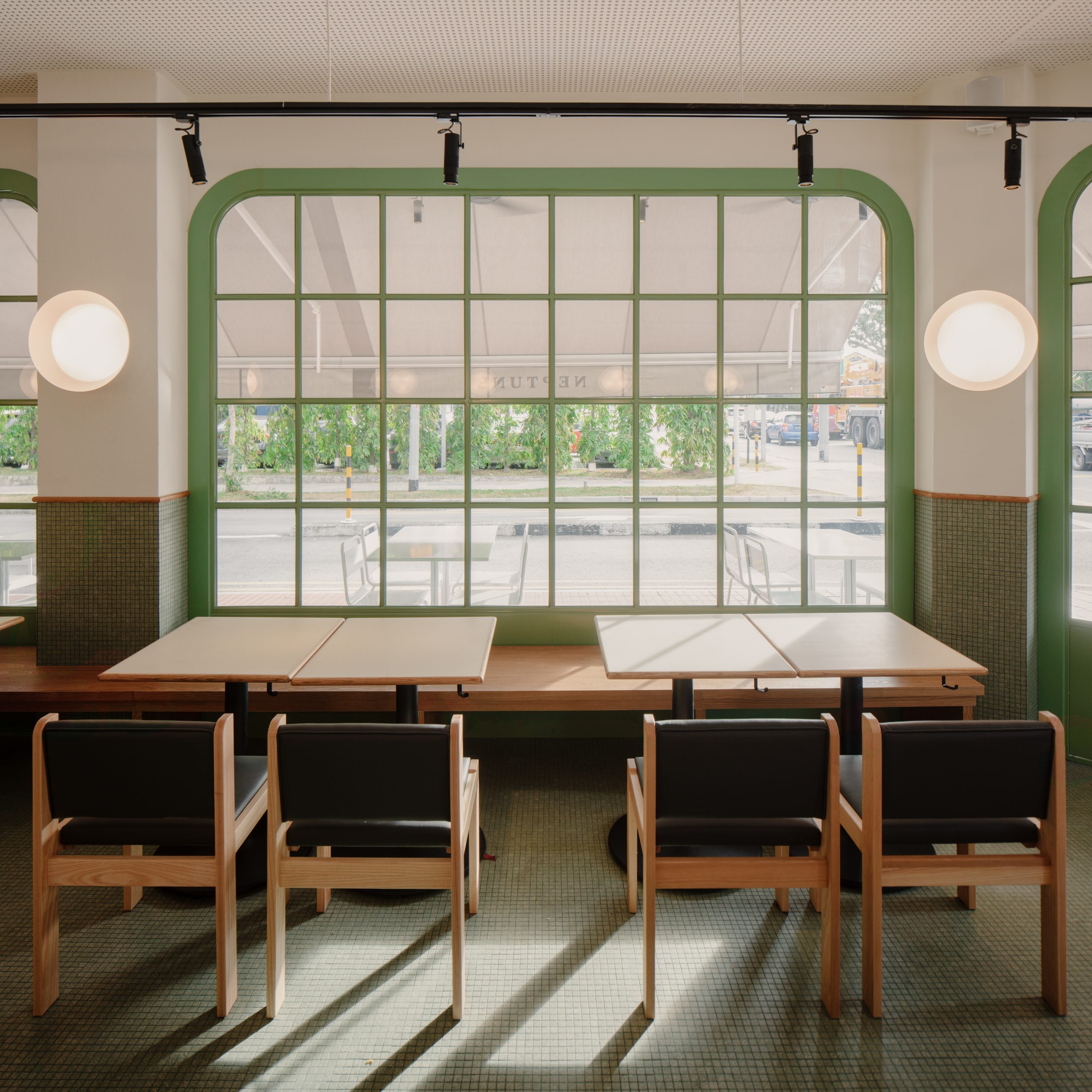
HuiDesigns includes acoustic perforated ceiling boards in the cafe. This acoustic installation works as an important element to allow customers to hear each other communicate. Mosaic tiles and wainscots mimic the aesthetic found in classic coffee shops known as kopitiams. These small square tiles add a local, vintage twist to this modern cafe.
Inspired by a 70s vintage Italian chair with clean lines, the cafe’s custom-made dining chairs work well with the design of the interior space. White geometric lights and tables contrast the lush green interior, softening the darker shades of the furniture and floor.
-

- Photo Credit: HuiDesigns
-
- Photo Credit: HuiDesigns
-

- Photo Credit: HuiDesigns