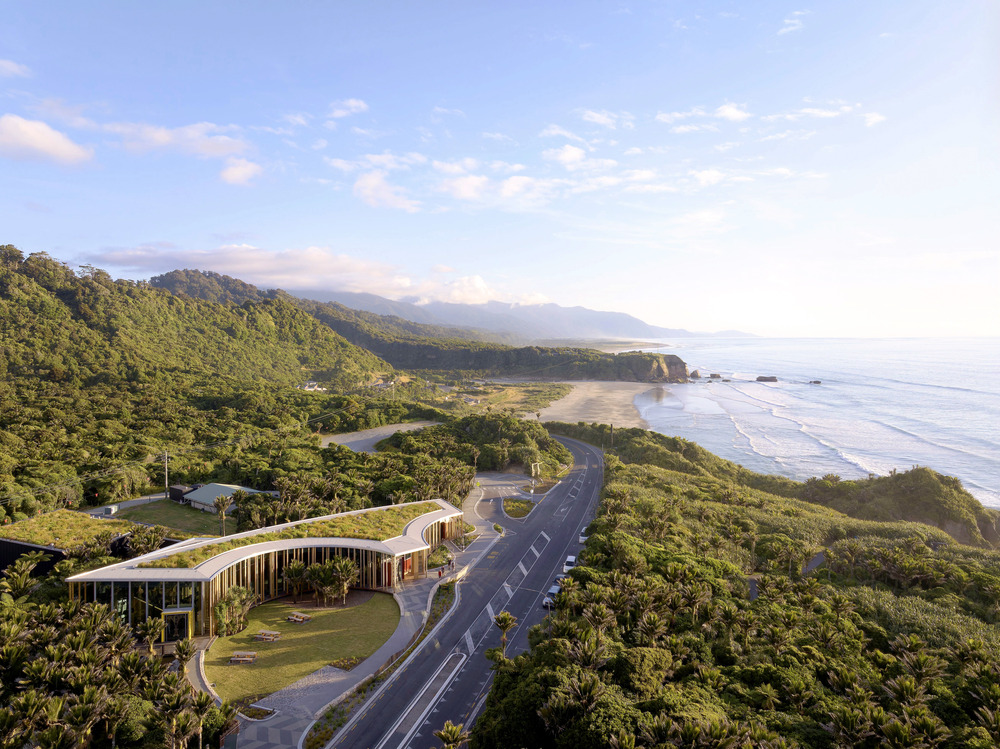
Set against the wild limestone cliffs and dense coastal forest of Punakaiki, Punangairi redefines what a visitor centre can be. Designed by Sheppard & Rout Architects, in collaboration with Ngāti Waewae, the project moves beyond tourism infrastructure to become an act of cultural and ecological restoration.
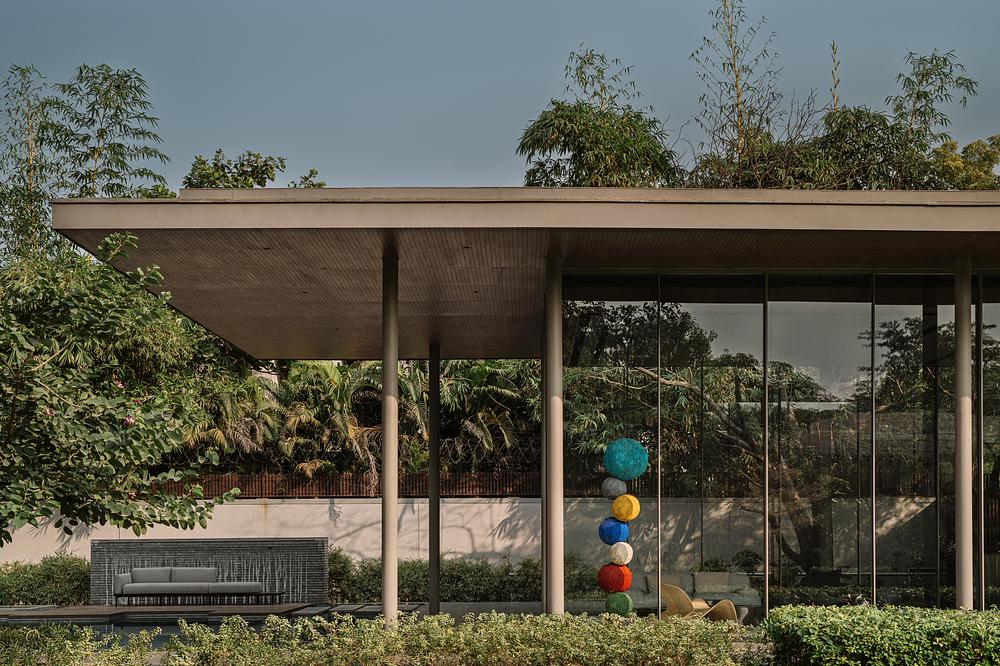
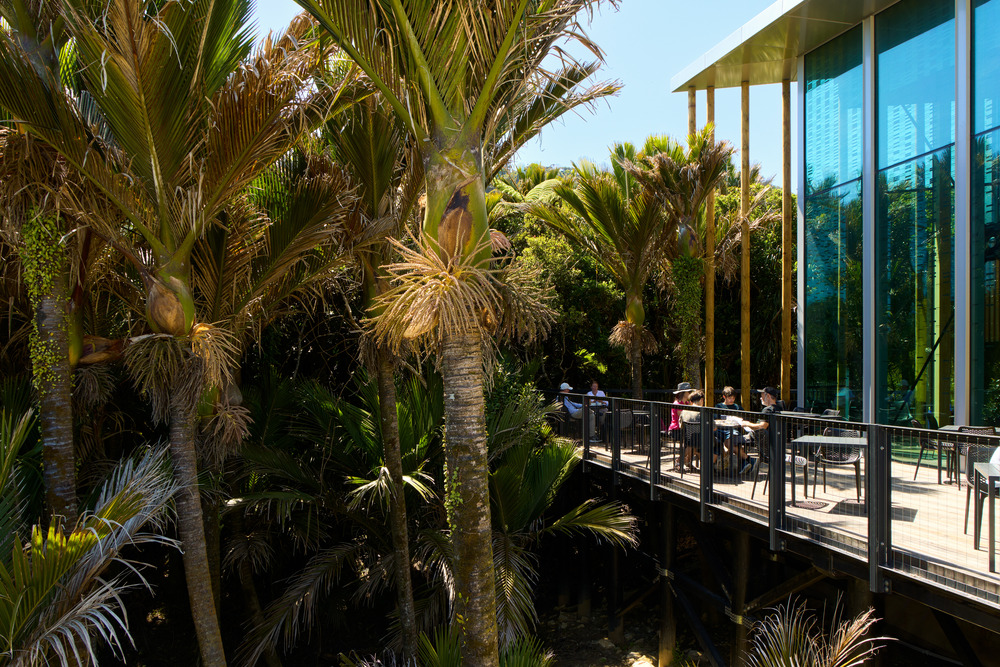
Rather than standing apart from its setting, the building appears to emerge from it. The low timber form weaves between existing nīkau palms and beneath a canopy of regenerated planting, its green roof extending the surrounding forest. The design responds to the site’s complex topography and fragile ecology, settling into the land with minimal disturbance. Every detail, from the material palette to the building’s alignment, was developed through dialogue with local iwi (tribe), ensuring that cultural narratives were embedded rather than applied.
-
- Photo credit: Jason Mann Photography
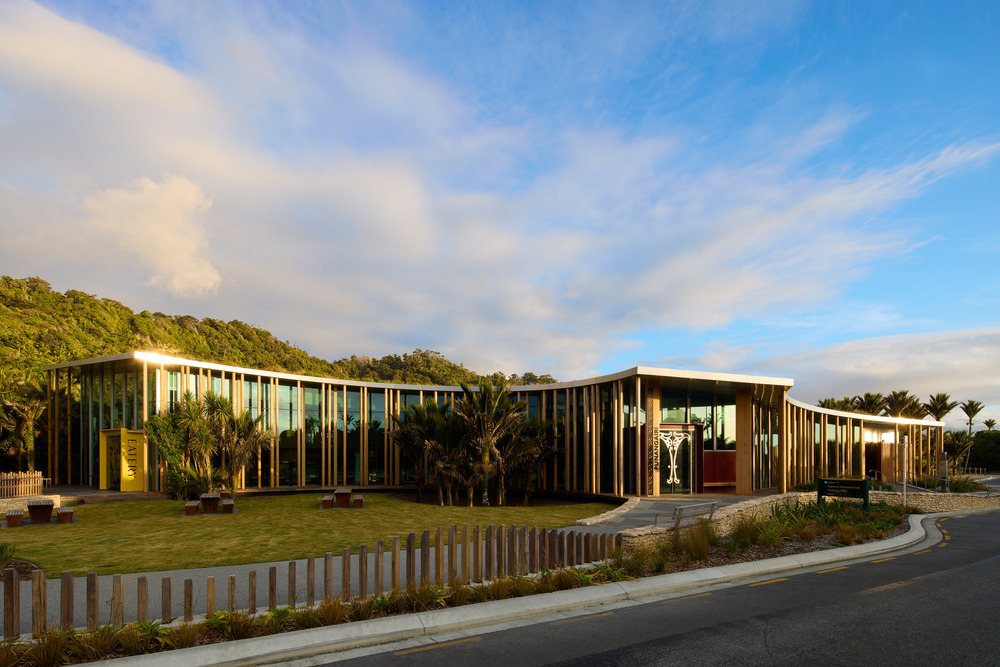
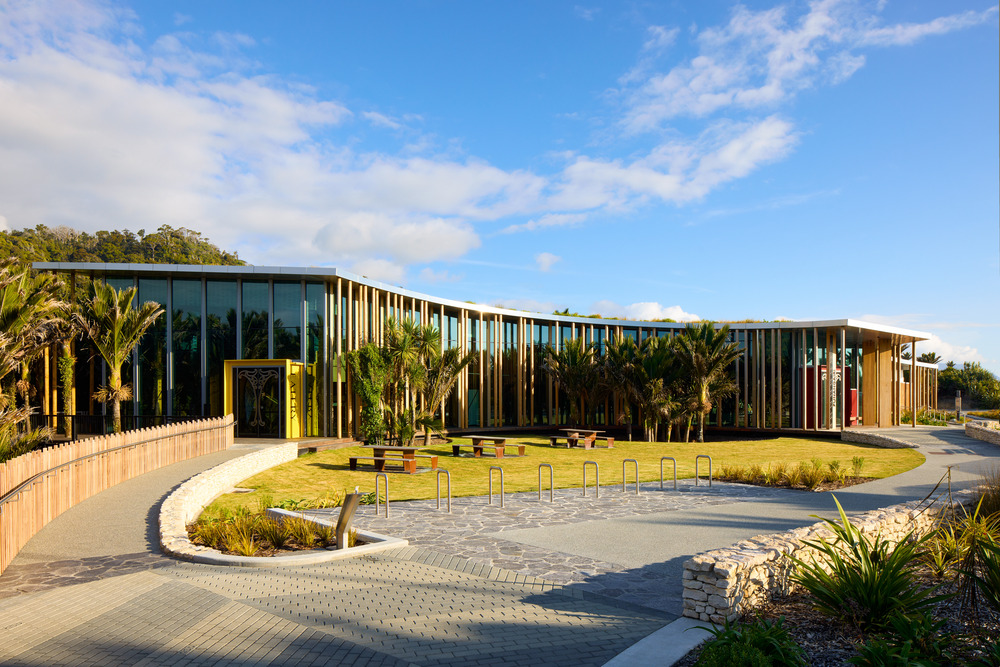
At the heart of the project is a rethinking of authorship and place. Ngāti Waewae, the mana whenua (people of the land), guided the project from its inception, shaping a design that communicates the values of manaakitanga (hospitality) and kaitiakitanga (guardianship). The result is a space that welcomes visitors into both the physical landscape and the living culture that defines it.
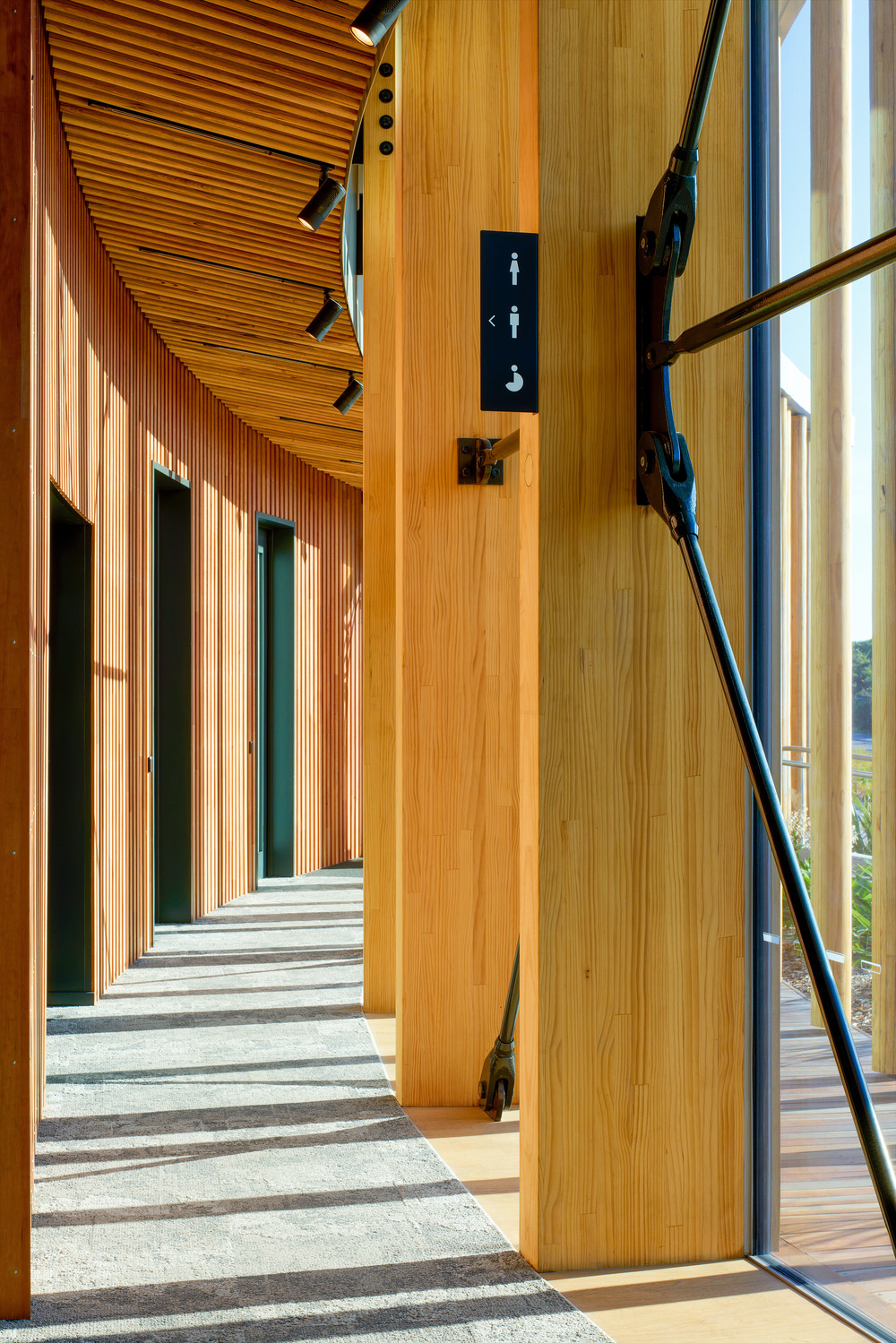
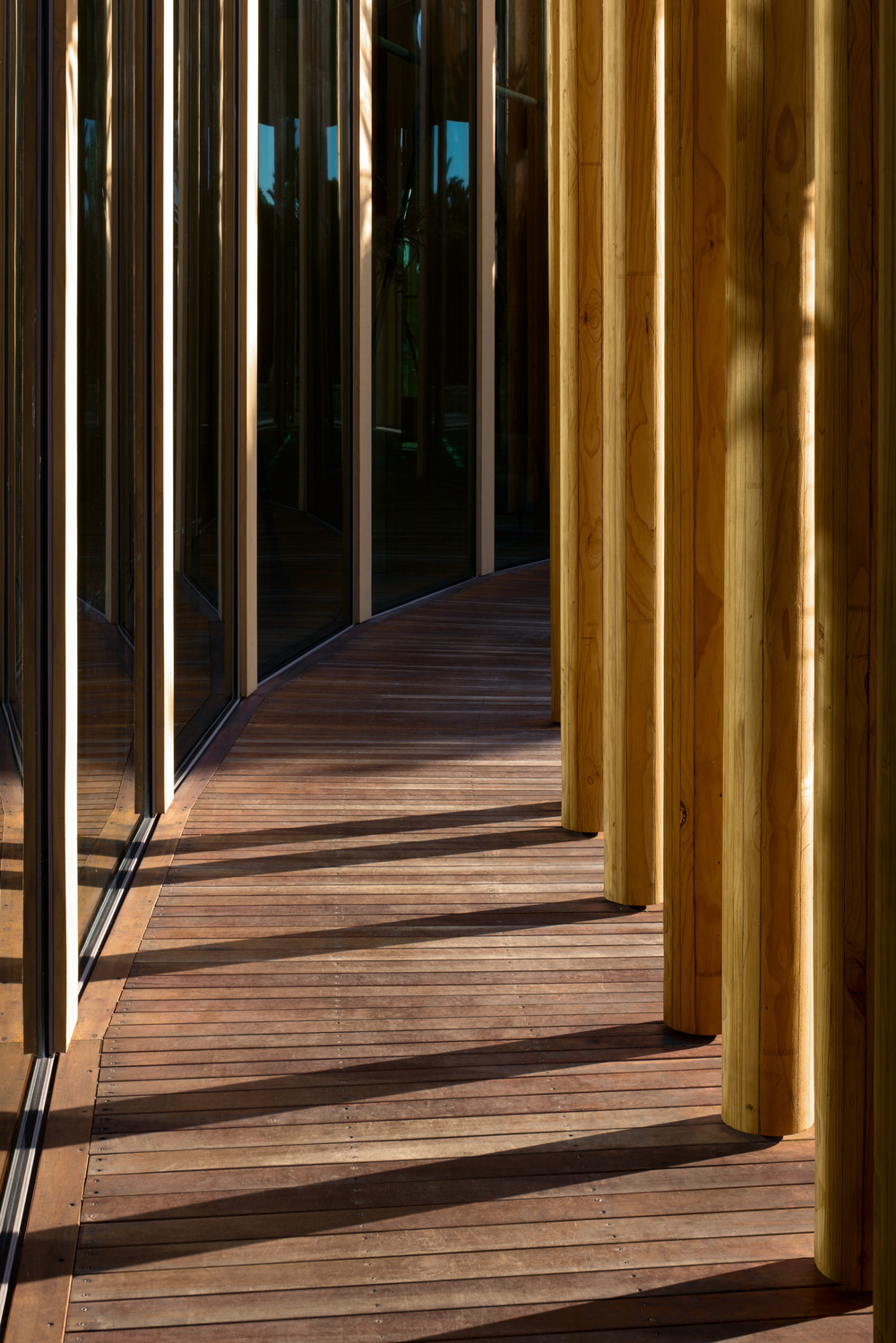
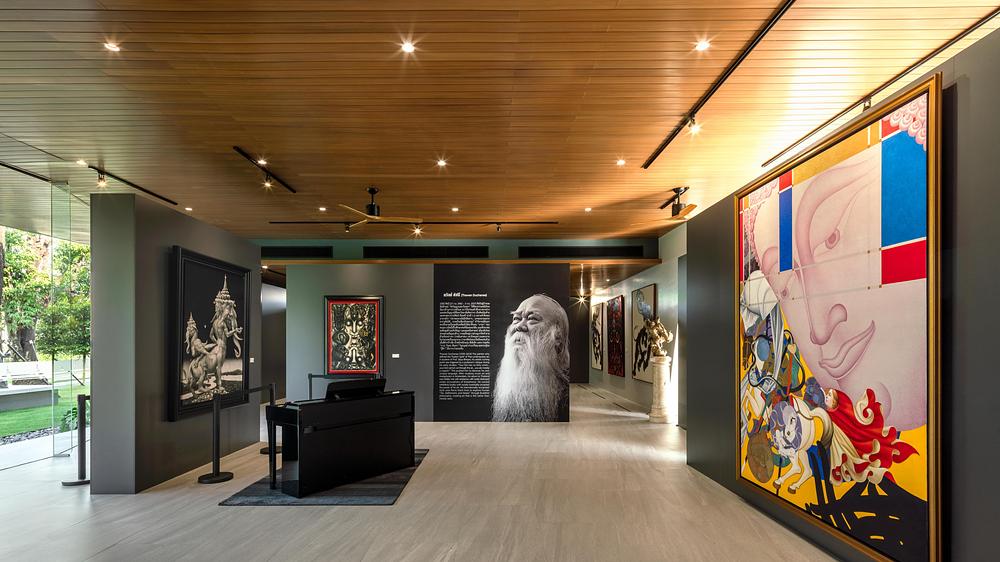
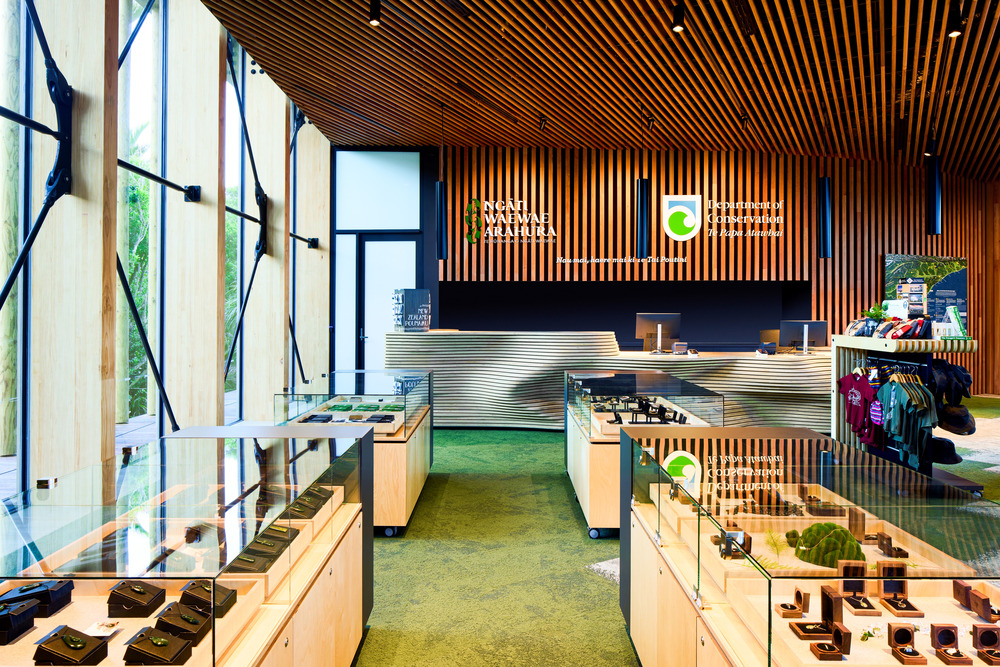
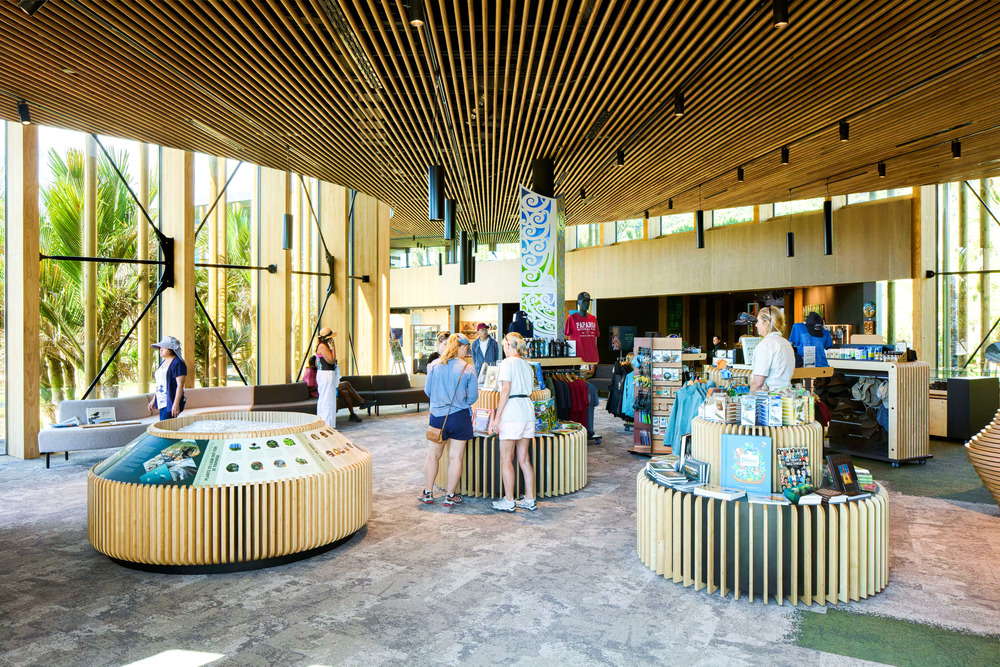
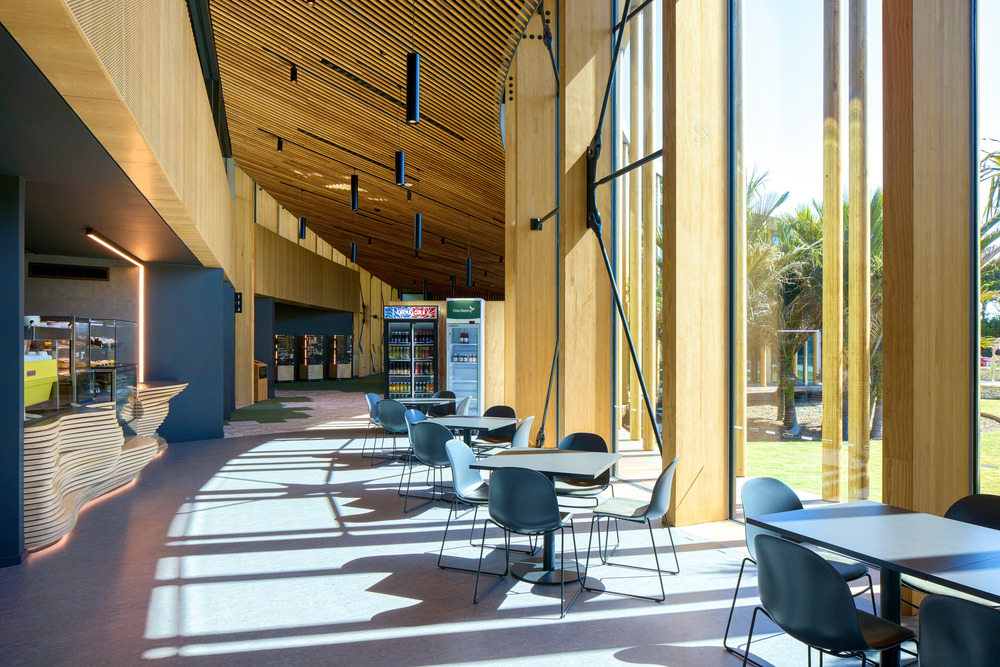
Inside, natural light filters through layered timber screens, echoing the dappled forest beyond. Locally sourced timber and stone form a tactile palette that references the region’s geology and craft traditions. The interior sequence moves fluidly from welcome to exhibition to reflection, creating a visitor experience that is less about display and more about encounter.
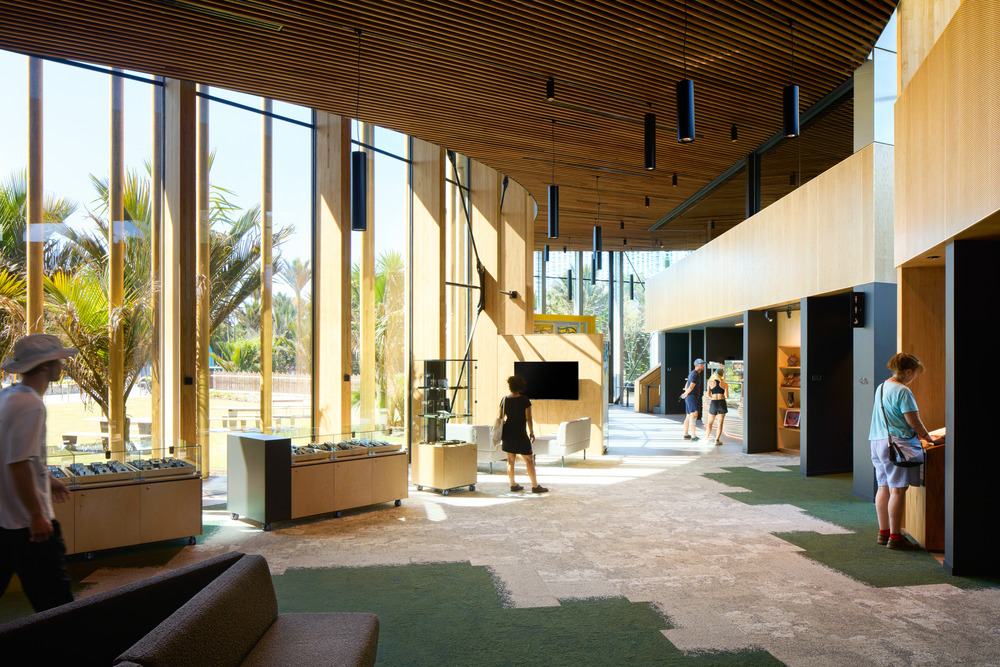
While modest in scale, Punangairi carries a wide-reaching ambition: to demonstrate that small buildings can hold large ideas. Its sustainable approach—minimising embodied carbon, reusing local materials, and employing passive design—reflects a regenerative ethos that extends beyond the building envelope. The project invites a reconsideration of how architecture might support both ecological systems and cultural continuity.
Punangairi stands as a threshold between land and sea, past and future, people and place. It offers a model for architecture that listens first, shaping form and experience around the stories and stewardship of those who belong to the land.